Download the Minor Hotels App




Download the Minor Hotels App
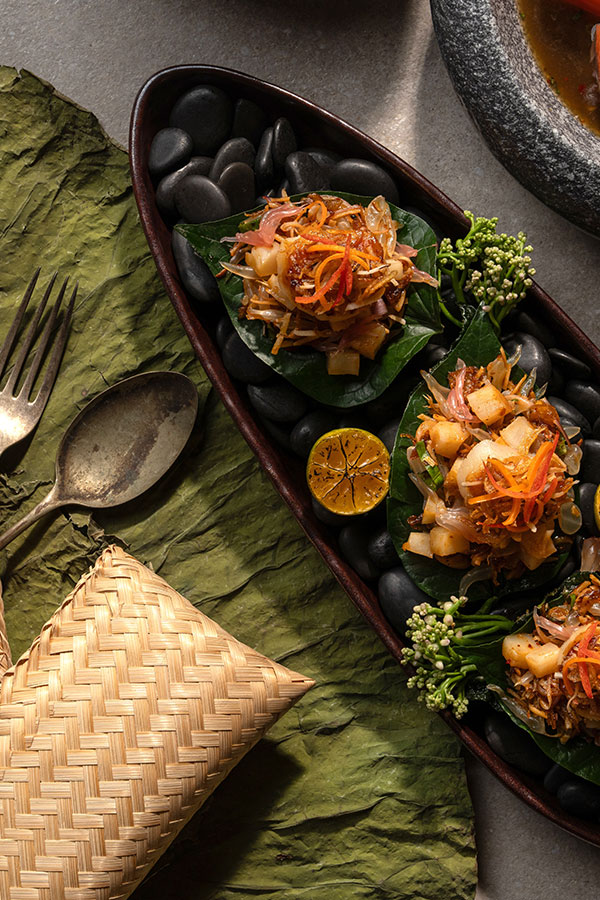
Thailand’s five regions offer flavours as distinctive as their landscapes and cultures, with every dish telling the story of its traditions, geography and homegrown ingredients.
BY KATIE MULLOY
THE CENTRAL PLAINS AND BANGKOK
Rot jat is a Thai phrase that means intense taste – and herein lies the ethos of central Thai cuisine. An even balance of hot, salty, sour and sweet, it’s a flavour profile that strikes the senses and lingers in the memory. Conjure up images of vibrant food stalls on the bustling streets of Bangkok and your sense flood with the fragrant aromas of chillies, lime, coconut, tamarind, sweet basil, galangal… They’re the foundations for the Thai cuisine known best internationally and featured on menus globally – red, green and Panaeng curries, as well as the tofu-and-shrimp noodle dish, phat Thai (usually Pad Thai on an English menu).
For an elevated experience of central Thai cuisine, take a seat at The Spice Market, the culinary epicentre of Anantara Siam Bangkok Hotel, where lush gardens, sumptuous, silk-draped interiors, and an unrivalled elegance make it the capital’s most prestigious – and serene – address. Amongst the refined dishes, which combine authentic flavours with innovative cooking technique, there is the famed tom kha gai (chicken coconut soup), khao pad nua kem (dried beef fried rice with sweet basil), and their signature gaeng kiew waan nua toon (The Spice Market’s take on the traditional green curry, which uses braised beed cheek and aubergine [eggplant]). Consider it a taste of Thailand’s culinary soul.

Central Thai food served at Anantara Siam Bangkok Hotel
THE NORTHERN REGION
Home to the country’s second-largest city, Chiang Mai, Thailand’s northern region is a vibrant zigzag of majestic mountain ranges and the river valleys that cut through them. Its resulting cooler climes support a wider variety of vegetables and are reflected in a culinary culture that’s slightly milder than its central counterparts. So you’ll discover curries rarely celebrated beyond regional borders, such as jackfruit curry, made from the stringy, meat-like unripened jackfruit, and palm heart curry, made from a vegetable that grows in a variety of palm trees. Also unique to the region are the more bitter roots and herbs used in its most famous dish, wild betel leaf soup, showcasing the eponymous peppery betel leaf alongside acacia leaves, Thai aubergine and the punchier variant of sawtooth coriander.
For an authentic noodle dish, order khao soi gai – a delicious bowl of squiggly noodles drenched in a thin gravy and served with small saucers of chopped shallots, sweet-spicy pickled cabbage, lime wedges and a thick red chilli sauce. It is a signature dish at Anantara Chiang Mai Resort’s Bodhi terrace restaurant, where it is served with river prawns, wagyu beef or chicken. Savour every flavourful forkful as you dine on the banks of the Mae Ping River, the gentle water before you and the canopy of the giant Banyan trees above you. It is where tranquility and taste – in every sense – align.

The 1921 House at Anantara Chiang Mai Resort
THE NORTHEASTERN REGION
Things heat up a little in the northeastern region, also known as Isaan. Rice paddies dominate its lower, agricultural landscape, and a slower, more traditional way of life honours its rural roots. But while the culture may be humble, the flavours are anything but, packed with powerful punches of spice and tastes of fermentation. Influences from Laos and Cambodia’s Khmer cuisine show up frequently, notably in the region’s preference for sticky rice – khao niao – over the regular white rice eaten in central and southern parts. You’ll find it served alongside gai yang – marinated chicken, grilled slowly over charcoal, with locally-grown lemongrass adding a distinct flavour that sets it apart from other versions of gai yang you’d find elsewhere.
In fact, lemongrass is one of the region’s defining ingredients. Combined with chillies and shallots, it forms the base of Isaan-style curry and can be found on the menu at Avani Khon Kaen, and even in the Citrus Lemongrass Body Scrub treatment in the hotel’s superb spa. In contrast to its rural periphery, Avani Khon Kaen is located in the heart of the region’s busiest city and offers a plethora of dining options. However, for an authentic taste of the area, we recommend the Avani Khon Kaen chef specials – pad see-ew (stir-fried noodles with black soy sauce) and tom yum (hot and sour soup).

Spicy papaya salad is often paired with grilled chicken and sticky rice
THE SOUTHERN REGION
The heat of the sun, the abundance of the sea and the blending of Thai, Malay and Chinese cultures come together to create the vibrant, generously spiced, unforgettably aromatic cuisine of southern Thailand. Unsurprisingly, fish, shellfish and chillies abound. Home to some of the world’s most supreme stretches
of sand, southern Thais would argue their region’s curries are as iconic as their coastlines. It is the birthplace of the Southern Thai yellow curry, which gets its deep hue from a heavy dose of turmeric in a sauce that holds freshwater fish, pineapple and green papaya. It is where the ubiquitous massaman curry also comes from – its paste is infused with cloves, cinnamon and cumin to create the sweetest and most comforting of Thai curries. While curry may be king, its queen is the southern-style roti, the round wheat-flour flatbread, born in India but seemingly raised in southern Thailand (it’s the only place where they are light and fluffy).
Experience it all on the region’s biggest island, Phuket, where Anantara Mai Khao Phuket Villas sits on the northern tip – a sliver of golden sand fringed by lush greenery and turquoise waters. As vibrant as the scenery is the authentically southern-Thai food at its award-winning La Sala restaurant, where you can experience a massaman curry to remember and a view of the lily-spotted lagoons you’ll never forget.

Fiery flavours at La Sala restaurant, Anantara Mai Khao Phuket Villas

Local ingredients on sale at a Thai floating market
THE EASTERN REGION
With its coastline stretching along the Gulf of Thailand, it’s unsurprising the eastern region, perhaps best-known for its famed beach resort city, Pattaya, has a close culinary connection to the sea. The region is the country’s largest producer of fish sauce (a key ingredient in Thai cooking) and its coastal villages are dotted with factories where this pungent elixir is made in vast quantities. Eastern Thai cuisine is known for its bold, bracing flavours, and nowhere is this more evident than in its spicy seafood sauce – a tangy, fiery concoction that infuses its famed fish sauce with chilli, lime juice and garlic.
People will tell you that this condiment was created by local fishermen who couldn’t cook fish on board their boats. Instead, they would cure their catch in this potent, citrus-spiked mix, similar to the preparation of ceviche, allowing them to enjoy the freshness of the fish even without cooking facilities. Other bold flavours waiting to be discovered in this lesser-known culinary corner of Thailand include the durian fruit (perhaps unfairly known as the world’s stinkiest fruit, but tasting far more fragrant when cooked with sticky rice and coconut to make a classic Thai dessert). These diverse culinary traditions are captured and refined at Avani Pattaya Resort, where you can dine al fresco in tropical gardens next to fragrant frangipani trees while warm sea breezes drift in from the ocean.
Discover more from the world of Minor Hotels.

Beachside relaxation at Avani Pattaya Resort
More Like This

A Legacy of Luxury
A quarter century ago, Anantara Hotels & Resorts began its journey with the opening of its first resort on the shores of Hua Hin, Thailand. Today, its unique brand of authentic luxury can be experienced around the world.

In Praise of Second Cities
It can sometimes seem like the great city adventures have all been done. But step off the well-worn circuit, and there are world-class destinations that still have the capacity to surprise and delight.
The Art of Noticing
From island tides to city street, travel reveals its meaning not in motion, but in the moments when we stop rushing and begin to pay attention.
Sign Up for Journeys
Receive travel inspiration from minor hotels straight to your inbox